Loading...
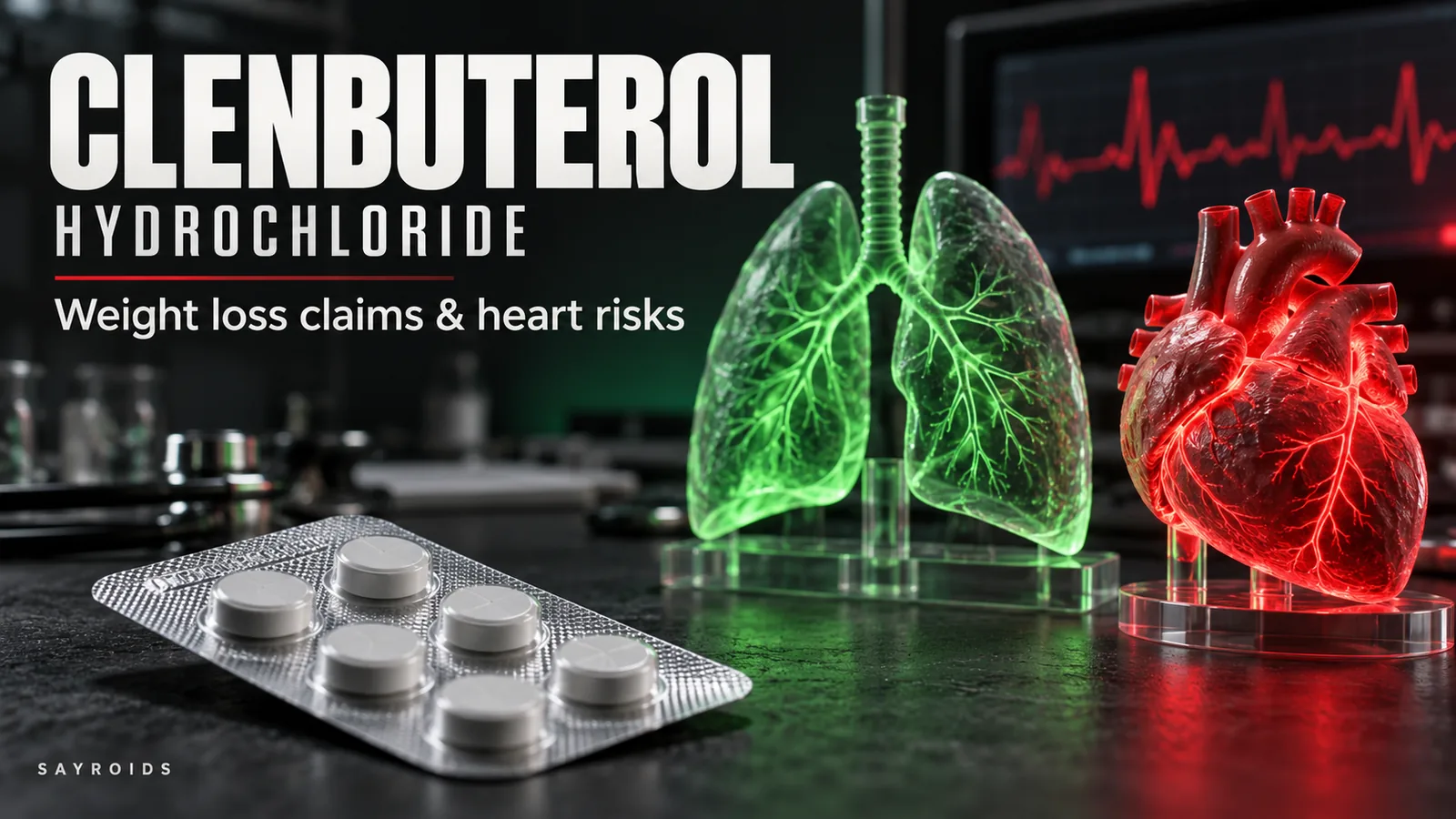
Clenbuterol Hydrochloride: Weight Loss Claims, Effects and Heart Risks
Clenbuterol hydrochloride is a bronchodilator that relaxes airway muscles. It belongs to a class of drugs called beta₂ adrenergic agonists. It is not an anabolic steroid, even though it is frequently discussed alongside steroids in bodybuilding.
Clenbuterol has veterinary uses and is used for respiratory conditions in some countries. It is not FDA approved for human use in the United States, including for weight loss. The Drug Enforcement Administration’s clenbuterol overview explains its classification and regulatory status.
Does clenbuterol burn fat and preserve muscle?
Its reputation as a cutting drug is stronger than the evidence supporting predictable fat loss.
A 2026 randomized trial in healthy adults found greater gains in lean mass and strength during resistance training compared with placebo. However, the reduction in fat mass did not differ significantly between groups. These findings do not establish clenbuterol as a safe or reliable weight loss treatment.
A separate 2025 trial involving 11 healthy men also found increased lean mass, but reduced cardiorespiratory fitness and diminished muscle responses with repeated exposure. Muscle growth and improved overall fitness therefore should not be treated as interchangeable outcomes.
Which claimed benefits need correction?
Original claimMore accurate explanationRapid fat burningHuman trials do not support a guarantee of rapid or substantial fat loss.NervousnessNervousness is an adverse effect, rather than a benefit.Greater determinationFeeling stimulated does not establish improved motivation or training performance.Appetite suppressionReduced appetite does not demonstrate that the drug is safe or effective for weight management.
Side effects can involve the heart and electrolytes
Clenbuterol can cause tremors, anxiety, palpitations, a rapid heartbeat, low potassium, and elevated blood sugar. Its long duration of action means adverse effects can persist well beyond the time it was taken.
The National Capital Poison Center describes serious toxicity, including heart attacks and cardiac arrest. These risks should not be dismissed as ordinary signs that the drug is “working.”
Are cycling schedules safe?
The escalating schedules commonly shared online should not be presented as medically validated protocols. Separate charts for men and women do not establish safe dosing, and a “two weeks on, two weeks off” schedule should not be interpreted as protection against cardiovascular injury.
Reduced sensitivity with repeated exposure is a pharmacological effect, not a reason to keep increasing the dose. Evidence of tolerance does not establish that a break makes subsequent use safe.
When should someone seek help?
Chest pain, fainting, difficulty breathing, or a persistent rapid or irregular heartbeat after taking clenbuterol require urgent medical assessment.
No members are reading this right now
Nobody has answered this yet.
If you have run it, what happened to you is the answer. What you took and for how long, what changed, and your bloodwork if you have it.
You do not need to be an expert. You need to have taken it.