Loading...

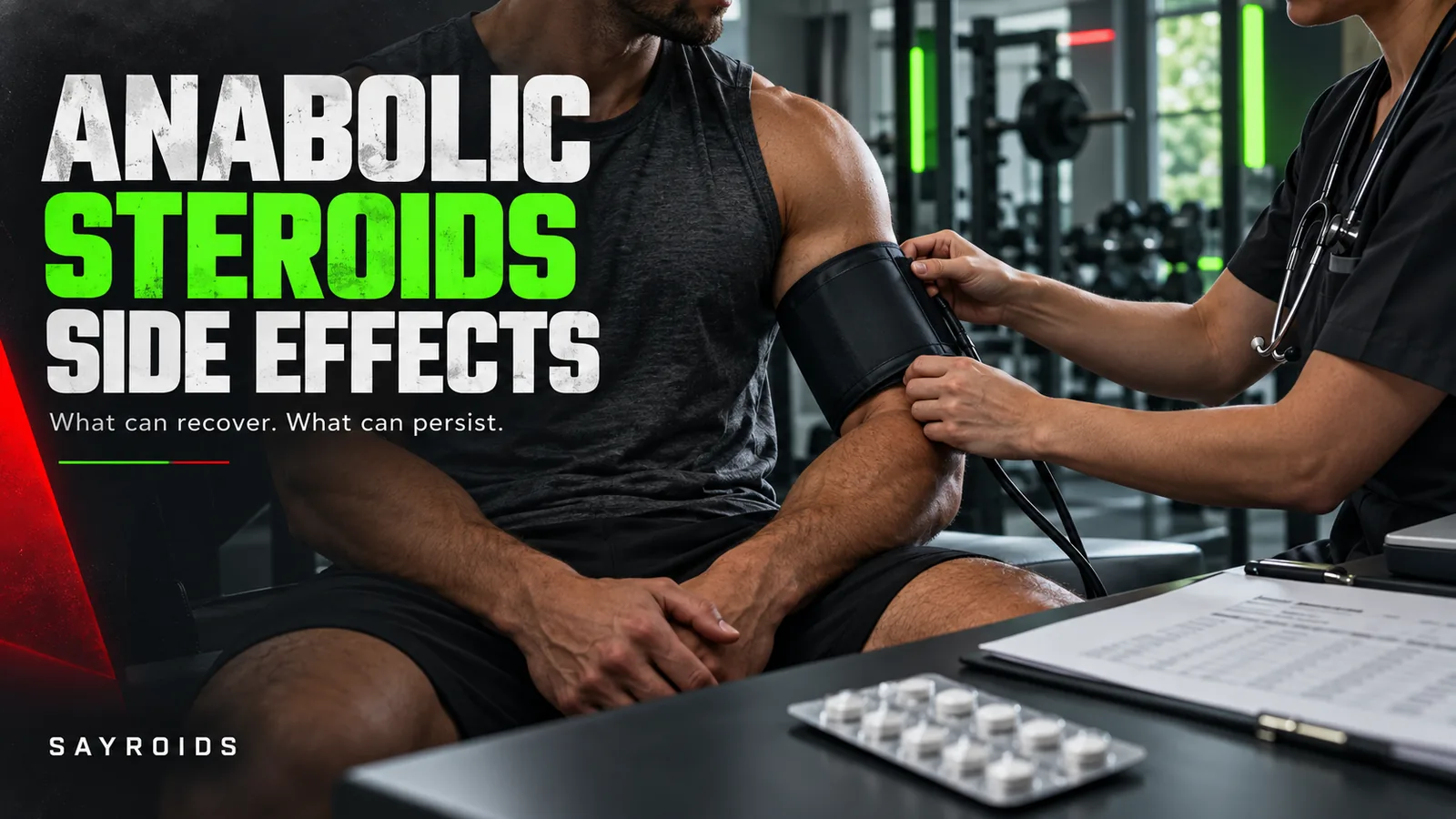
Anabolic Steroid Side Effects: What Can Recover and What May Persist?
Anabolic steroids can affect cardiovascular health, hormone production, fertility, mood, and organ function. The risks depend on the substance, dose, duration, other drugs used, and individual health.
Some effects improve after stopping. Others can persist or cause permanent harm. Dividing side effects into strictly “short term” and “long term” categories can be misleading because serious complications are not limited to prolonged use.
Which side effects can occur?
The NHS guide to anabolic steroid misuse describes physical and psychological effects in both men and women. Not everyone experiences every effect, and feeling well does not rule out a developing problem.
Area affectedPossible effectsCardiovascular healthHigh blood pressure, adverse cholesterol changes, blood clots, heart attack, and strokeMood and behaviourIrritability, aggression, mood swings, anxiety, and sometimes severe psychiatric symptomsHormones and fertilityReduced sperm production, testicular shrinkage, sexual difficulties, and menstrual disruptionSkin and appearanceAcne, hair loss, breast development in men, and increased facial or body hair in womenFluid balanceFluid retention and swellingOrgan healthLiver and kidney problems
These are physical and hormonal changes, rather than “gender changes.” That phrase does not accurately describe steroid adverse effects.
Do the effects reverse after stopping?
Recovery varies. Hormone production, sexual function, and fertility may improve, but recovery can take months or longer and is not guaranteed.
A review of recovery after anabolic steroid use found substantial variation between individuals. Established gynecomastia, meaning breast tissue growth in men, was unlikely to resolve through hormonal recovery alone.
Some androgenic changes in women, including voice deepening, can be irreversible. NIDA’s steroid information discusses these lasting effects.
Stopping exposure also cannot be assumed to reverse damage already caused by a stroke or other serious medical event.
What about liver damage and cancer?
“Cancer” should not be presented as one uniform outcome for every steroid. Certain anabolic steroids, particularly some orally active compounds, are associated with liver injury and liver tumors.
NIH LiverTox describes impaired bile flow, abnormal blood-filled spaces in the liver, benign liver tumors, and hepatocellular carcinoma associated with androgenic steroid exposure. These findings need specific context rather than a blanket claim that all users will develop cancer.
Can buying an authentic product prevent side effects?
Product quality matters, but authenticity does not remove a drug’s inherent risks. Research has also identified
No members are reading this right now
Nobody has answered this yet.
If you have run it, what happened to you is the answer. What you took and for how long, what changed, and your bloodwork if you have it.
You do not need to be an expert. You need to have taken it.