Loading...

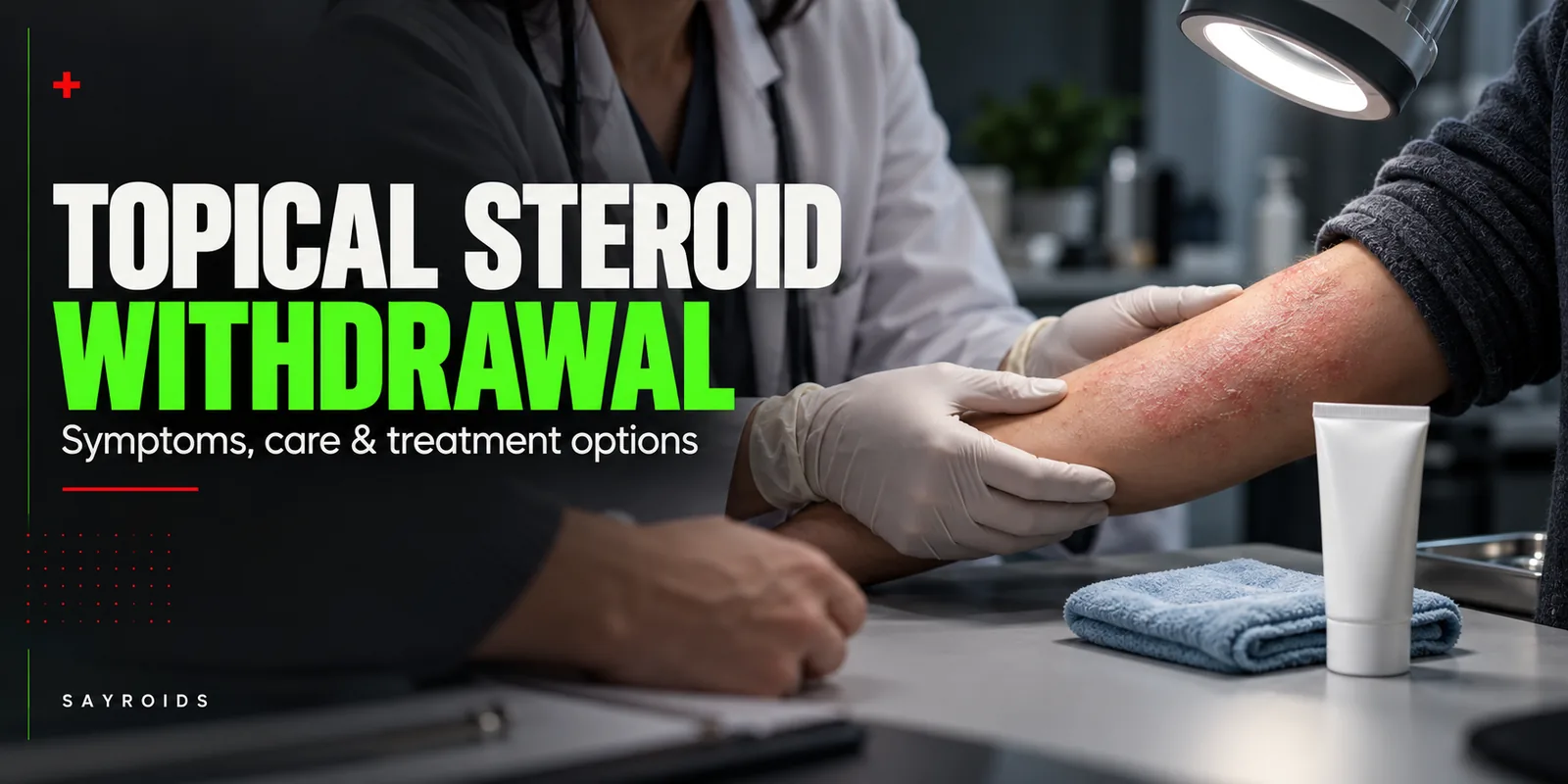
Topical Steroid Withdrawal Treatment: What Are the Options?
Topical steroid withdrawal, often shortened to TSW, describes reactions reported after reducing or stopping topical corticosteroids, particularly following prolonged, frequent use of stronger preparations.
These are anti-inflammatory creams and ointments used for conditions such as eczema. They are different from the anabolic steroids discussed in bodybuilding.
Recognising possible withdrawal
Reported symptoms include burning, stinging, intense itching, peeling, and skin colour changes that may extend beyond the treated area. However, a rash returning after treatment does not automatically mean TSW.
The MHRA’s patient guidance advises consulting a doctor when symptoms return within days or weeks of stopping, rather than simply restarting treatment yourself.
Treatment begins with assessment
A dermatologist should review your symptoms, original skin condition, and the strength, amount, and duration of corticosteroid use. Eczema flares, contact allergy, and infection may need consideration.
Treatment evidence remains limited. Eczema UK emphasises medical supervision and supportive care, including attention to pain, hydration, nutrition, and psychological wellbeing.
Should steroid creams be stopped immediately or gradually?
There is no single withdrawal schedule suitable for every patient. The decision should account for the diagnosis, exposure history, and any concern about adrenal suppression.
A 2025 expert consensus study supported cessation of topical and systemic corticosteroids in TSW management. This was expert consensus, rather than a clinical trial proving the best approach for everyone. It should not be interpreted as an instruction to abruptly stop prescribed treatment independently.
Which treatments may help?
OptionIts possible roleSupportive skin careGentle care and suitable moisturisers may help manage dryness and discomfort, according to individual tolerance.Cool compressesMay soothe burning temporarily; they are not a cure.AntibioticsConsidered when an infection warrants treatment, rather than routinely for withdrawal itself.DupilumabA specialist may consider it, particularly when significant atopic dermatitis is also present.Oral corticosteroidsShould not be presented as a routine TSW treatment or started without specialist assessment.
Supportive measures are described in DermNet’s TSW overview. Antibiotic decisions require assessment: NICE guidance advises against routinely prescribing antibiotics for suspected infected eczema in people who are not systemically unwell.
What does the evidence say about dupilumab?
The 2025 consensus panel supported dupilumab as a first-line systemic option. Its established indication includes moderate-to-severe atopic dermatitis; that does not make it a guaranteed cure for TSW. Suitability, risks, and monitoring require a dermatologist’s assessment.
The aim is to establish the cause of symptoms, relieve discomfort, treat complications, and maintain an appropriate plan for the underlying skin condition.
No members are reading this right now
Nobody has answered this yet.
If you have run it, what happened to you is the answer. What you took and for how long, what changed, and your bloodwork if you have it.
You do not need to be an expert. You need to have taken it.