Loading...
Steroids and Facial Appearance: Bloating, Acne and Hair Loss
nobody has answered yet

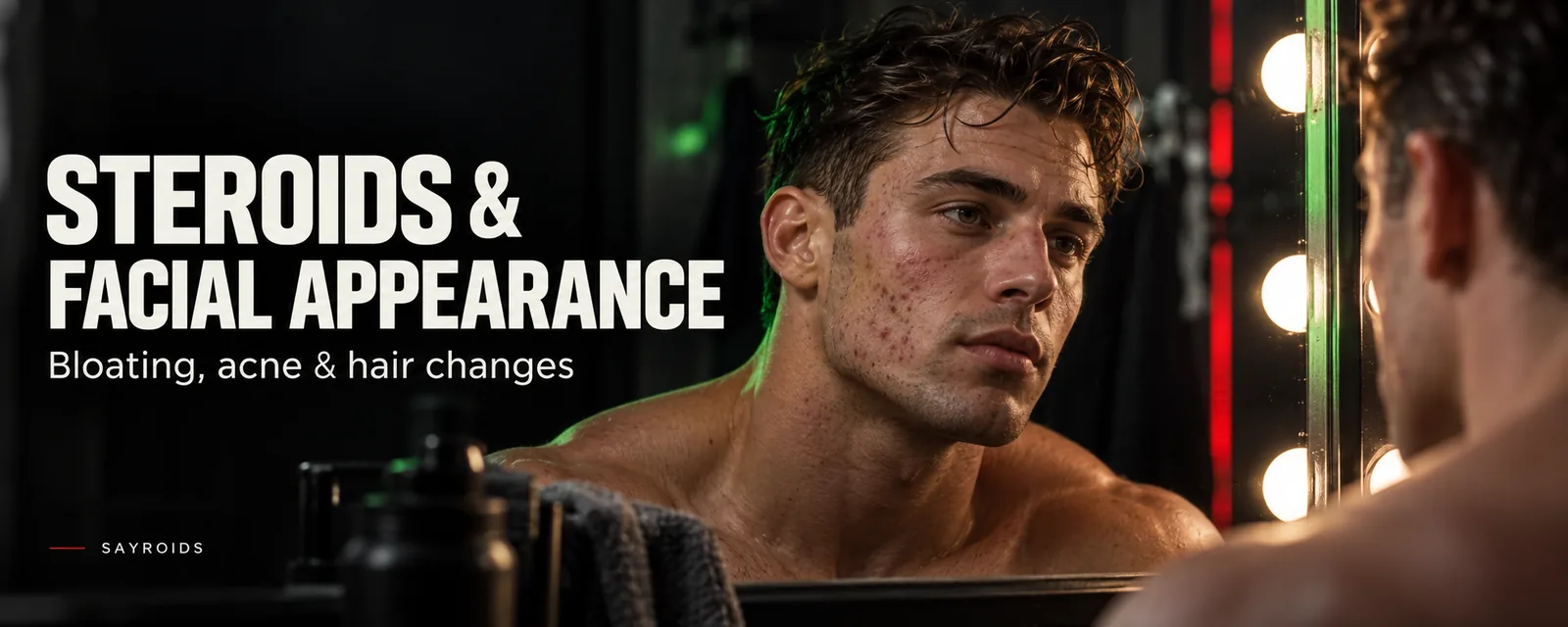
Steroids and Facial Appearance: Bloating, Acne and Celebrity Myths
A lean physique and a sharp jawline can make a celebrity’s transformation look effortless. That often leads to questions about which drugs they might use and whether certain steroids can build muscle without changing facial appearance.
No anabolic steroid can guarantee freedom from facial puffiness, acne, hair loss, or other visible effects. A photograph also cannot reliably reveal someone’s drug use or medical history.
How can anabolic steroids affect appearance?
Anabolic steroids can cause fluid retention, severe acne, and hair loss. These effects may influence how someone’s face, skin, and hairline look. Individual responses vary, so another person’s experience cannot predict your own.
The NHS overview of anabolic steroid misuse describes these changes alongside cardiovascular, reproductive, and psychological risks. Looking healthy does not establish that someone is avoiding those less visible effects.
Does a “dry look” mean fewer side effects?
Bodybuilding discussions often describe certain compounds as producing a “dry” appearance. This language describes an aesthetic impression rather than a medical safety standard.
Less obvious puffiness does not guarantee clear skin, an unchanged hairline, or protection from other adverse effects. Selecting a compound based on its reputation for appearance therefore provides no dependable assurance.
Facial swelling and structural changes are different
Temporary changes in facial fullness should not be confused with enlargement of facial bones or soft tissues.
Chronic excess growth hormone can cause structural changes, as seen in acromegaly. These may include a more prominent brow or lower jaw and enlargement of the nose, lips, and tongue. Growth hormone is a separate hormone from anabolic steroids.
The National Institute of Diabetes and Digestive and Kidney Diseases explains these effects. Acromegaly is usually caused by a pituitary tumor, and its symptoms should not be used to diagnose drug use from someone’s appearance.
Why celebrity photographs are poor evidence
Lighting, makeup, camera angles, editing, genetics, and body fat can all influence how a face appears. Images taken under different conditions may create the impression of a dramatic change without explaining its cause.
Unless someone credibly discloses their use, a claimed “Hollywood cycle” is speculation. Even a genuine disclosure would not establish that the same substances would produce the same results in another person.
What should someone do about visible changes?
Persistent swelling, worsening acne, or hair loss deserves assessment. If you use prescribed testosterone or other hormones, tell your clinician when the changes began and disclose all medicines and supplements.
Adding an aromatase inhibitor, diuretic, or another drug based on appearance alone is not a reliable solution. The appropriate response depends on the cause.
Preserving facial appearance involves more than choosing a supposedly cosmetic-friendly steroid. There is no verified celebrity formula that guarantees muscle gains while leaving your face and health unaffected.
No members are reading this right now
Nobody has answered this yet.
If you have run it, what happened to you is the answer. What you took and for how long, what changed, and your bloodwork if you have it.
You do not need to be an expert. You need to have taken it.